
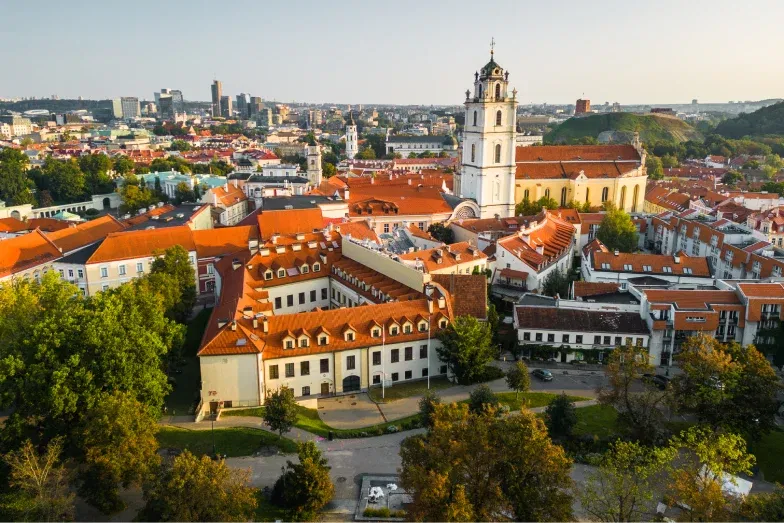
Nestled in the heart of Eastern Europe, Vilnius is a city where centuries-old cobblestone streets whisper tales of empires, revolutions, and resilience. For travelers seeking a Vilnius travel guide: culture & history, this Lithuanian capital offers an immersive journey through layers of rich heritage, architectural grandeur, and vibrant traditions. From its UNESCO-listed Old Town to hidden courtyards echoing with Jewish and Polish legacies, Vilnius blends medieval charm with modern creativity. Whether you’re drawn to Gothic cathedrals, Soviet-era relics, or contemporary art scenes, this guide unpacks the city’s soul—revealing why culture and history aren’t just attractions here, but living, breathing elements of daily life.
Discovering Vilnius: A Cultural Crossroads Since the Middle Ages
Vilnius has long served as a cultural crossroads, shaped by influences from Poland, Russia, Germany, and the Jewish diaspora. Founded in the 14th century by Grand Duke Gediminas, the city quickly became a strategic hub within the Grand Duchy of Lithuania—one of Europe’s largest medieval states. Its location on key trade routes fostered a cosmopolitan atmosphere early on, attracting merchants, scholars, and artisans from across the continent. This melting-pot legacy is still visible today in the city’s diverse religious architecture, multilingual street signs, and culinary traditions that blend Slavic, Baltic, and Central European flavors.
The Old Town, a UNESCO World Heritage Site since 1994, stands as the best-preserved medieval urban center in Northern Europe. Winding alleys, pastel-colored Baroque facades, and over 70 churches reflect Vilnius’s layered past. Unlike many European capitals ravaged by war or modernization, Vilnius retained much of its historic fabric—thanks in part to periods of relative isolation during Soviet rule. Today, this preserved authenticity draws culture seekers who want more than postcard sights; they crave context, continuity, and connection to real stories etched into every stone.
Architectural Marvels: Tracing Vilnius’s Historical Layers
Vilnius’s architecture reads like an open history book, with each era leaving its mark. The city boasts one of the finest collections of Gothic, Renaissance, Baroque, and Neoclassical buildings in Eastern Europe. At its heart stands the iconic Gediminas Castle Tower, perched atop Castle Hill—a symbol of Lithuanian statehood and a reminder of the city’s medieval origins. Nearby, St. Anne’s Church captivates with its intricate red-brick Gothic design, often called “the most beautiful church in Lithuania.” Napoleon reportedly admired it so much he wanted to carry it back to Paris in his pocket.
Baroque dominates much of the Old Town, especially around Pilies Street and Cathedral Square. This ornate style flourished in the 17th and 18th centuries under Polish-Lithuanian rule and Catholic revival. But beyond the grand facades lie hidden gems: wooden synagogues in the former Jewish quarter, Art Nouveau apartment buildings with floral motifs in Užupis, and Soviet-era brutalist structures like the massive Palace of Concerts and Sports. These contrasting styles don’t clash—they coexist, telling a nuanced story of adaptation, resistance, and reinvention across centuries.
Religious Diversity and Sacred Spaces
Religion has always played a central role in Vilnius’s cultural identity. The city was once known as the “Jerusalem of the North” for its thriving Jewish community, which made up nearly half the population before World War II. Though tragically decimated during the Holocaust, traces remain in the Choral Synagogue (the only active one in Lithuania) and the haunting Holocaust Memorial at Paneriai. Today, Orthodox, Catholic, Lutheran, and even Karaite communities contribute to a pluralistic spiritual landscape.
Churches like St. Michael the Archangel and the Gate of Dawn—with its revered Marian icon—draw pilgrims and tourists alike. The latter is especially significant: the Chapel of Our Lady of the Gate of Dawn has been a site of Catholic devotion since the 17th century and remains a symbol of interfaith harmony. Meanwhile, Užupis—a self-declared “republic” within Vilnius—embodies artistic freedom and spiritual playfulness, with its own constitution, flag, and patron saint (artist and poet Angel of Užupis).
The Jewish Heritage of Vilnius: Memory, Loss, and Revival
Before World War II, Vilnius was home to over 100,000 Jews and boasted more than 100 synagogues, making it one of Europe’s most important centers of Jewish learning and culture. The city’s Jewish quarter, centered around today’s Žydų Street, was a hub of Yiddish literature, Hasidic thought, and Zionist activism. Figures like the Vilna Gaon, a towering 18th-century Talmudic scholar, cemented Vilnius’s reputation as a beacon of Jewish intellectual life. The Strashun Library, founded in 1892, housed over 200,000 volumes and was considered the “Jewish Vatican.”
Tragically, the Holocaust devastated this community. Between 1941 and 1944, Nazi forces and local collaborators murdered over 90% of Vilnius’s Jews. Mass graves at Ponary (Paneriai), just outside the city, hold the remains of tens of thousands. Today, memorials, museums, and annual commemorations keep these memories alive. The Vilna Gaon Jewish State Museum offers exhibits on pre-war life, resistance, and survival, while the Green House serves as a poignant Holocaust education center. Efforts to revive Yiddish culture—through language courses, music festivals, and theater—signal a quiet but powerful renaissance.
Visitors can walk the “Jewish Heritage Trail,” which includes the former Great Synagogue site (now a parking lot with an archaeological display), the Tolerance Center, and the bustling Lukiškės Prison—once a symbol of oppression, now repurposed as a contemporary art space. This transformation mirrors Vilnius itself: acknowledging pain without being defined by it, and turning sites of trauma into spaces of reflection and renewal.</
Soviet Legacy and the Fight for Independence
Vilnius endured nearly five decades of Soviet occupation (1940–1941, 1944–1991), a period that profoundly shaped its urban and cultural landscape. Under Stalin, entire neighborhoods were demolished to make way for wide boulevards and monumental socialist architecture. The city’s name was Russified, Lithuanian language use was suppressed, and religious practices were heavily restricted. Yet, resistance simmered beneath the surface—through underground publications, secret Catholic masses, and the preservation of national symbols like the banned tricolor flag.
The Singing Revolution of the late 1980s marked a turning point. Mass peaceful protests, folk songs, and human chains—like the 1989 Baltic Way, where two million people joined hands across Estonia, Latvia, and Lithuania—galvanized the independence movement. In 1990, Lithuania became the first Soviet republic to declare independence. Though briefly occupied again during the January 1991 Soviet crackdown (which killed 14 civilians near the TV Tower), the world took notice, and full independence was restored by September 1991.
Today, remnants of the Soviet era are neither erased nor glorified—they’re contextualized. The Museum of Occupations and Freedom Fights (formerly the KGB Museum) occupies the former headquarters of Soviet secret police and documents both Nazi and Soviet atrocities. The TV Tower, site of the 1991 tragedy, now features an observation deck and a memorial plaque. Street art in districts like Šnipiškės often incorporates Soviet imagery with ironic or critical undertones, reflecting a generation reclaiming its narrative.
Contemporary Culture: Where Tradition Meets Innovation
Modern Vilnius pulses with creative energy, blending deep-rooted traditions with avant-garde expression. The city hosts over 30 museums and galleries, ranging from the National Gallery of Art to quirky spaces like the Museum of Illusions and the quirky Devil Museum (featuring over 3,000 devil figurines). Annual events such as the Vilnius International Film Festival, the Street Music Day, and the Užgavėnės carnival draw locals and visitors into shared cultural experiences that feel both timeless and fresh.
Užupis, often dubbed “Vilnius’s Montmartre,” epitomizes this fusion. This bohemian district declared itself an independent republic in 1997, complete with its own government, currency (the Užupis litas), and constitution—which begins, “Everyone has the right to be unique.” Artists, poets, and musicians fill its courtyards with murals, sculptures, and open-air performances. Cafés serve organic coffee alongside traditional šaltibarščiai (cold beet soup), and galleries showcase experimental Lithuanian art alongside international collaborations.
Meanwhile, the city’s culinary scene reflects its multicultural past. Restaurants like Džiugys and Sweet Root reinterpret Lithuanian staples—like cepelinai (potato dumplings) and kugelis (potato pudding)—with modern techniques and global influences. Food halls like Lokys and seasonal markets in Vingis Park highlight local producers, while craft breweries and natural wine bars cater to a growing gastro-tourism trend. For culture lovers, dining in Vilnius isn’t just about taste—it’s a sensory dive into history, migration, and identity.
Festivals and Living Traditions
Vilnius celebrates its heritage through vibrant festivals that bridge past and present. Joninės (St. John’s Day) in June honors summer solstice with bonfires, flower wreaths, and folk songs—a pagan tradition embraced by Christians and secular Lithuanians alike. During Kaziuko mugė (St. Casimir’s Fair) in March, the Old Town transforms into a bustling marketplace selling handmade crafts, amber jewelry, and traditional breads.
Music remains a cornerstone of cultural life. The Lithuanian National Opera and Ballet Theatre stages world-class performances, while intimate venues like Loftas Club host jazz, electronic, and world music acts. Traditional sutartinės—polyphonic folk songs recognized by UNESCO—are performed at cultural centers and school events, ensuring intergenerational transmission. Even public spaces become stages: during summer, open-air concerts in Bernardine Gardens or along the Neris River draw crowds who picnic under centuries-old trees.
Key Takeaways: Why Vilnius Stands Out for Culture & History Lovers
- Vilnius offers an authentic, layered historical experience—from medieval castles to Soviet monuments—without the overt commercialization of Western European capitals.
- The city’s Jewish heritage is deeply respected and thoughtfully preserved, with museums, memorials, and revival initiatives providing meaningful context beyond surface-level tourism.
- Architectural diversity tells a story of resilience: Gothic spires, Baroque domes, and brutalist blocks coexist, reflecting centuries of political change and cultural exchange.
- Contemporary creativity thrives alongside tradition, especially in districts like Užupis and Šnipiškės, where street art, indie galleries, and innovative cuisine redefine what heritage can mean.
- Local festivals and daily rituals keep history alive—whether through folk songs, seasonal fairs, or simply sipping kvass in a 16th-century courtyard.
Conclusion: A City That Honors Its Past While Embracing the Future
Vilnius is more than a destination—it’s a dialogue between eras. Every alleyway, monument, and meal invites travelers to engage with a narrative that’s still unfolding. For those drawn to places where history isn’t confined to textbooks but woven into the fabric of everyday life, Vilnius delivers with humility, depth, and quiet pride. Its culture isn’t performative; it’s lived. Its history isn’t distant; it’s palpable. Whether you’re tracing the footsteps of medieval dukes, honoring Holocaust memory, or dancing at a summer festival under the Baltic stars, Vilnius ensures that your journey through its streets becomes a personal chapter in its ongoing story.
FAQs
What makes Vilnius’s Old Town unique compared to other European historic centers?
Vilnius Old Town stands out for its exceptional preservation and architectural diversity. Unlike many cities rebuilt after wars, Vilnius retained much of its medieval layout and Baroque embellishments. Its UNESCO status recognizes not just beauty, but historical continuity—layering Gothic, Renaissance, and Soviet influences in one compact, walkable area.
Is it possible to explore Vilnius’s Jewish history respectfully as a tourist?
Absolutely. Start with the Vilna Gaon Jewish State Museum and the Green House Holocaust Education Center. Visit the Choral Synagogue and the Paneriai Memorial. Many guided tours are led by knowledgeable locals or descendants of survivors, offering deep context. Always approach sites with reverence—photography may be restricted in certain areas.
How has Soviet rule influenced modern Vilnius culture?
Soviet rule left physical marks—like the TV Tower and brutalist buildings—but also fostered a strong sense of national identity through resistance. Today, this legacy is openly discussed in museums and public art. Younger generations reinterpret Soviet symbols with irony or critique, while older residents share personal stories, creating a culture that acknowledges trauma without being defined by it.
